SPRING - APRIL–JUNE WORMING GUIDE
APRIL WORMING GUIDE
Ivermectin Equine Paste provides effective control of the following parasites in horses: Large Strongyles (adults) Strongylus vulgaris (also early forms in blood vessels) S. edentatus (also tissue stages) S. equinus Triodontophorus spp; Small Strongyles including those resistant to some benzimidazole class compounds (adults and fourth stage larvae) Cyathostomum spp. Cylicocyclus spp. Cylicostephanus spp. Cylicodontophorus spp; Pinworms (adults and fourth stage larvae): Oxyuris equi; Ascarids (adults and third and fourth stage larvae) Parascaris equorum; Hairworms (adults) Trichostrongylus axei; Large mouth Stomach Worms (adults) Habronema muscae; Bots (oral and gastric stages) Gasterophilus spp; Lungworms )adults and fourth stage larvae) Dictyocaulus arnfieldi; Intestinal Threadworms (adults) Strongyloides westeri; Summer Sores caused by Habronema and Draschia spp. cutaneous third stage larvae; Dermatitis caused by neck threadworm microfilariae Onchocerca sp.
Ivermectin + Fly Control
Ivermectin is one of the most effective and widely used dewormers for common parasites in horses, including:
-
Large and small strongyles
-
Bots
-
Ascarids (in young horses)
-
Pinworms
It’s often recommended more than once per year, but never more than 3x/year, if used strategically. The reason it appears in multiple months is due to:
Dosage Chart:
-
250 lbs: 1/5 syringe
-
500 lbs: 2/5 syringe
-
750 lbs: 3/5 syringe
-
1000 lbs: 4/5 syringe
-
1250 lbs: Full syringe
Parasites Controlled:
-
Strongyles, bots, pinworms, ascarids
Warnings:
-
Use fly repellents in combo; not effective on encysted larvae
-
Warnings: Avoid overuse to prevent resistance; not effective against encysted larvae.
Active Ingredients:
-
Ivermectin 1.87%


Bimectin 1.87% Ivermectin


Best For:
Broad-spectrum spring worming
Dosage:
250 lbs: 1/5 syringe
500 lbs: 2/5 syringe
750 lbs: 3/5 syringe
1000 lbs: 4/5 syringe
1250 lbs: Full syringe
Parasites Controlled:
Bots, strongyles, pinworms, ascarids
Warnings:
Avoid use in debilitated horses
Active Ingredients:
Ivermectin 1.87%
Bimectin(R) 1.87%
-
Ivermectin Apple Flavored Paste Wormer by Bimeda(R)
Anthelmintic and boticide:
-
controls large and small strongyles, pinworms, ascarids, hairworms, large mouth stomach worms, lungworms, intestinal threadworms and bots.
Proven safe for:
-
pregnant mares, breeding stallions and foals
Dosage:
-
Each syringe treats up to a 1250 lb. horse.
Best For:
-
Roundworms
-
pinworms in spring
-
large strongyles
-
encysted early 3rd stage
-
late 3rd stage and 4th stage cyathostome larvae
-
small strongyles
-
ascarids
-
arteritis caused by 4th stage larvae
Dosage:
For foals and weanlings (less than 18 months of age) where ascarids are a common problem, the recommended dose is 4.6 mg/lb (10 mg/kg); one syringe will deworm a 550 lb horse.
Parasites Controlled:
-
Roundworms, pinworms
Warnings:
-
Use 5-day protocol for encysted larvae.
Active Ingredients:
-
Fenbendazole 10%
Panacur (3 Pack) Dewormer Horse Paste 10%, 100mg Each


Panacur Dewormer
May Worming Guide
Holistic Option for April Worming Guide or a Year Round Supplement
UltraCruz Equine Garlic Flakes Supplement for Horses, 2 lb

UltraCruz Equine Garlic Flakes Supplement for Horses, 25 lb

Holistic Alternatives:
Garlic-based feed-through, neem oil spray
Frequency of Use:
Springtime or after fecal count review
About this item
-
May help provide animals protection against insects, acting as a natural insect repellent
-
Provided as large flakes designed to minimize nostril irritation and product waste
-
Can support healthy immune and respiratory systems
-
Safe for year-round supplementation
-
Supplied as 2 lb bucket, 90 scoops
Features & Specs
Flavor: Garlic, Herbal
Item Form: Flakes
Product Description
UltraCruz® Equine Garlic Flakes for Horses is an herbal supplement composed of all natural, pure, minced garlic to help maintain a healthy immune system and respiratory system. Supplement all year to support overall health. The large flakes are designed to minimize nostril irritation and product waste.
Directions
• For horses over 500 lbs feed 2 – 3 (20 – 30 g) scoops once daily. • For smaller horses 100 - 500 lbs, feed 1 – 2 (10 – 20 g) scoops once daily.
Paste Horse Dewormer, Safe for use in breeding, Pregnant and lactating mares, and Young Foals

-
Broad-spectrum:
-
This broad-spectrum dewormer helps to control and remove internal parasites in horses and ponies
-
Effective:
-
Strongid Paste is effective against mature infestations of large strongyles, small strongyles, roundworms, and pinworms
-
Treatment:
-
Ideal for the essential treatment of ascarids (roundworms) in foals at 2 months of age
-
Designed for:
-
Safe for use in breeding, pregnant and lactating mares, as well as in young foals
-
Dosage: Each syringe treats up to 1,200 pounds of body weight
Pyrantel Pamoate
Dosage Chart:
250 lbs: 1/5 syringe
500 lbs: 2/5 syringe
750 lbs: 3/5 syringe
950 lbs: 4/5 syringe
1200 lbs: Full syringe
Warnings:
Do not use in debilitated horses without guidance
Holistic Option for May Worming Guide
Natures Wisdom Food Grade Diatomaceous Earth 24 Oz.

Natures Wisdom Food Grade Diatomaceous Earth 1 lb. Jar

Diatomaceous Earth (Food Grade)
Natural Equine Parasite Support
Diatomaceous Earth (DE) is a naturally occurring powder made from the fossilized remains of tiny aquatic organisms called diatoms. When fed to horses in safe, food-grade form, it may help support internal parasite management by physically damaging parasite exoskeletons in the digestive tract—without using chemicals.
Best For:
-
Spring parasite load reduction
Dosage:
-
1 tbsp per 500 lbs body weight in feed daily
Parasites Controlled:
-
Internal parasite prevention
Warnings:
Must be food-grade; ensure constant access to water.
Active Ingredients:
100% Diatomaceous Earth (fossil shell flour)
Best For:
Spring parasite load reduction and year-round pasture management as a holistic alternative or complement to traditional wormers.
How It Works:
The microscopic sharp edges of DE scratch and dehydrate parasite larvae in the gut, reducing the chance of further development. It's not a chemical dewormer, but a mechanical one—making it a great rotation tool or preventative during low-risk seasons.
How to Use:
Dosage:
- Ponies: 1 tbsp daily
- Horses under 800 lbs: 2 tbsp daily
- Horses over 800 lbs: 1/4 cup daily
Method:
Mix with daily grain or feed (ensure water is available)
Frequency:
Use daily for at least 30 days, especially during spring and summer. Safe for long-term use when rotated with fecal egg count checks and traditional dewormers.
Important Notes:DE does not kill encysted larvae or bots.
June Worming Guide
Ivermectin Equine Paste provides effective control of the following parasites in horses: Large Strongyles (adults) Strongylus vulgaris (also early forms in blood vessels) S. edentatus (also tissue stages) S. equinus Triodontophorus spp; Small Strongyles including those resistant to some benzimidazole class compounds (adults and fourth stage larvae) Cyathostomum spp. Cylicocyclus spp. Cylicostephanus spp. Cylicodontophorus spp; Pinworms (adults and fourth stage larvae): Oxyuris equi; Ascarids (adults and third and fourth stage larvae) Parascaris equorum; Hairworms (adults) Trichostrongylus axei; Large mouth Stomach Worms (adults) Habronema muscae; Bots (oral and gastric stages) Gasterophilus spp; Lungworms )adults and fourth stage larvae) Dictyocaulus arnfieldi; Intestinal Threadworms (adults) Strongyloides westeri; Summer Sores caused by Habronema and Draschia spp. cutaneous third stage larvae; Dermatitis caused by neck threadworm microfilariae Onchocerca sp.
Ivermectin + Fly Control
Ivermectin is one of the most effective and widely used dewormers for common parasites in horses, including:
-
Large and small strongyles
-
Bots
-
Ascarids (in young horses)
-
Pinworms
It’s often recommended more than once per year, but never more than 3x/year, if used strategically. The reason it appears in multiple months is due to:
Dosage Chart:
-
250 lbs: 1/5 syringe
-
500 lbs: 2/5 syringe
-
750 lbs: 3/5 syringe
-
1000 lbs: 4/5 syringe
-
1250 lbs: Full syringe
Parasites Controlled:
-
Strongyles, bots, pinworms, ascarids
Warnings:
-
Use fly repellents in combo; not effective on encysted larvae
-
Warnings: Avoid overuse to prevent resistance; not effective against encysted larvae.
Active Ingredients:
-
Ivermectin 1.87%
Why Ivermectin Might Be Used Multiple Times In A Year
Why Ivermectin Might Be Used Multiple Times throughout the year.
SEASON
Clearing out Strongyles and Bots as Horses come off winter pasture.
Breaking the Parasite Lifecycle before Fall; also targeting Bots before fly season ends.
SPRING-APRIL
LATE SUMMER-AUGUST/SEPTEMBER
Best time to target Bots before they embed or overwinter in the stomach.
LATE FALL NOVEMBER/DECEMBER
Parasites to target: Encysted small strongyles
Recommended wormer: Moxidectin (Quest Gel)erPac)

Moxidectin 2% Gel – A powerful dewormer (macrocyclic lactone class like ivermectin) effective against encysted small strongyle larvae as well as bots and other worms. Often sold as Quest® Gel. Use with caution in foals or minis due to narrower safety margin.
-
Do not use concurrently with other macrocyclic lactones.
Quest Plus Gel (Moxidectin + Praziquantel)
Description:
Quest Plus Gel is a broad-spectrum dewormer combining Moxidectin and Praziquantel. It targets bots, encysted small strongyles, and tapeworms — ideal for late fall and winter use.
Best For:
-
Adult horses over 6 months
-
Horses on rotational worming plans
-
Targeting heavy parasite loads before spring
Active Ingredients:
-
Moxidectin 2% – Kills bots, small/large strongyles, pinworms
-
Praziquantel 12.5% – Specifically targets tapeworms
Dosage by Weight:
Horse Weight Syringe Amount
250 lbs1/5 syringe
500 lbs2/5 syringe
750 lbs3/5 syringe
1000 lbs4/5 syringe
1250 lbsFull syringe
-
Always dose based on accurate body weight
-
Use the plunger markings on the syringe to set dosage
-
Do not split doses across multiple horses
Warnings & Precautions:
-
Do not use in foals under 6 months
-
Use caution in miniature horses and ponies (risk of overdose)
-
Avoid use in sick, underweight, or debilitated horses without vet approval
Active Constituents:
Each gram contains: a minimum of 500,000 chlamydospores of Duddingtonia flagrans IAH 1297.
Properties:
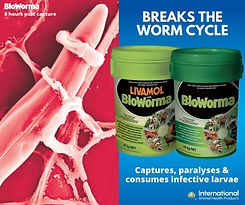
BioWorma® contains the spores of Duddingtonia flagrans, a natural fungus found in soil and on pasture. It is a non-chemical biological control for the free-living stages of parasitic gastrointestinal nematodes of grazing animals, which acts by substantially reducing the numbers of infective worm larvae (including chemical/multi-resistant larvae) emerging from manure onto pasture. When fed to animals, the thick-walled spores remain inert (having no effect within the host animal) and resist digestion, passing through into the manure. There they germinate and form trapping organs that capture, paralyse and consume emerging worm larvae (including chemical/multi-resistant larvae), interrupting the crucial re-infestation stage of the parasites’ life cycle, thus reducing the amount of re-infection on the pasture.
The spores are safe, non-toxic and residue-free. There are no negative effects on non-target soil nematodes, earthworms, microarthropods etc.
Biological control with Duddingtonia flagrans is applicable to the larvae of: SEE LABEL FOR FULL LIST
Sheep & Goats: Barber’s Pole Worm or Wire Worm (Haemonchus spp.), Black Scour Worm or Hair Worm (Trichostrongylus spp.), Brown Stomach Worm (Teladosagia (Ostertagia) spp.), Nodule Worm (Oesophagostomum spp.), Thin-necked Intestinal Worm (Nematodirus spp.) and Hookworm (Bunostomum spp).
Cattle: Barber’s Pole Worm or Wire Worm (Haemonchus spp.), Brown Stomach Worm (Ostertagia spp.), Black Scour Worm or Hair Worm (Trichostrongylus spp.), Hookworm (Bunostomum spp.), Intestinal Worm (Cooperia spp.), Thin-necked Intestinal Worm (Nematodirus spp.), Nodule Worm (Oesophagostomum spp.).
Horses: Large strongyles (large red worms), including Strongylus spp., Triodontophorus spp. and Oesophagodontus spp., small strongyles (small red worms or cyathostomes), including Cyathostomum spp., Cylicocyclus spp. and Cylicostephanus spp., Stomach Hair Worm (Trichostrongylus axei), Ascarids (Parascaris equorum), Threadworms (Strongyloides westeri) and Pinworms (Oxyuris equi).
Other grazing animals: including Deer, Alpacas and zoo animals
Dosage and administration:
Abridged see DIRECTIONS FOR USE on label and read carefully
-
Treat animals with a suitable chemical wormer.
-
Move treated animals onto low worm pasture (ideally not grazed by the same animal species for a minimum 6 weeks).
-
Commence daily use of BioWorma® to minimise pasture infectivity and maintain the animal’s low worm status.
-
Thoroughly mix BioWorma® with feed or feed supplements. BioWorma® will begin to work immediately within the manure.
-
Recommended for strategic use during periods when weather conditions are conducive to larval development and transmission on pasture at temperatures above 5° Celsius (40° Fahrenheit) throughout the year. Use in conjunction with a recommended worm management strategy program for your area.
Bodyweight* (kg)2550100200300400500**
Dosage (grams per head per day)1.53612182430
*Dose according to heaviest animal in the group.
**Use additional 6 g for each 100 kg thereafter
Holistic Alternative for June
BioWorma®
Biological control for worms
Natural biological control to reduce infective nematode larvae within the manure of grazing animals
-
An in feed non-chemical biological control for the free-living stages of parasitic gastrointestinal nematodes of grazing animals
-
Acts by substantially reducing the numbers of infective worm larvae emerging from manure onto pasture (including chemical/multi-resistant larvae)
-
Biological control with Duddingtonia flagrans is applicable to the larvae of Horses, Cattle, Sheep, Goats and other grazing animals including Deer, Alpacas and Zoo animals
-
A natural fungus that is safe, non-toxic and residue-free
-
It has no negative effects on non-target soil nematodes, dung beetles, earthworms, microarthropods, soil bacteria and fungi.